Prompt…?
Original MFA paragraph
“Through this practice, I noticed parallels between creating AI imagery and the process required for the 'doing' of performance. Each AI image's algorithmic and artificial nature showed how they work within an unavoidable fiction, one that is inherent to the process itself, much like performance. However, along with a sense of working in the gap between fact and fiction, the prompter/artist must become the ringmaster. One with the required awareness of the importance of live language as the key communication tool that will create a unique work in that very moment, where a simple word can be misinterpreted and lead to the misunderstanding of intention and image; and invest in a sense of surrender in a space where anything could happen, and expose the need to regain control or steer the work into new, rich areas, in the moment.
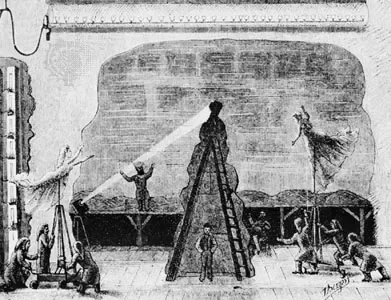
The works are simultaneously images and unknowns, reshaped in static and frenetic moments—elements fantastically drawn together into the light. Like performance, these images offer fictional representations of fact and true stories via digital means. Moreover, poetically, when the light extinguishes, or code is deleted, AI creations and performance reveal their ephemeral nature as they, borrowing from Walter Benjamin, "dissolve into nought."“
ARTICLE PROPOSAL
This article proposes that contemporary AI image generation operates less as a representational technology than as a performative process. Like live performance, it unfolds within an unstable field of intention, interpretation, and surrender, where language functions as an event rather than a set of instructions.
This move does three things immediately:
Aligns AI with performance ontology, not visual culture alone.
Foregrounds liveness and risk, avoiding instrumentalist readings of AI.
Positions the prompter as performer, not operator—an idea already latent in your application’s “ringmaster” metaphor .
You can then introduce the central analogy:
Prompt ≈ score
Image generation ≈ live enactment
Iteration ≈ rehearsal
Misinterpretation ≈ productive failurE
2. Key conceptual bridge: performance theory → AI practice
Your paper will be strongest if it explicitly mobilises performance theory to explain AI, rather than the reverse. Three performance concepts are particularly fertile:
a) Liveness as contingency
AI image generation, like performance, is irreducibly contingent. The same prompt never produces the same result twice. This resonates with Philip Auslander’s debates on liveness, but more importantly with practice-based performance epistemologies, where knowledge is produced in the act.
b) Language as action
Your insight that “a simple word can be misinterpreted” mirrors:
Stanislavski’s concern with intention vs action
Meisner’s emphasis on response
Brecht’s exposure of theatrical mechanics
In AI prompting, language is not descriptive; it is operative, closer to a speech act than a caption.
c) Surrender and control
This is where your work contributes something genuinely new. The oscillation between surrender and reassertion of control is:
Central to live improvisation
Central to algorithmic collaboration
Rarely theorised as a shared conditioN
3. Artists and works that naturally frame the argument
Rather than surveying “AI art”, I would anchor the paper in performance lineages that already behave algorithmically, then fold AI into that lineage
TROIKA RANCH
Their use of ISADORA, motion capture, and feedback systems establishes a precedent for live systems that co-author performance. Your work extends this logic from sensors to language.
Digilounge: https://www.bristol.ac.uk/parip/Int_Lycouris_web.pdf
SCOTT DELA HUNTA (DIGILOUNGE PRESENTER AND THEORIST)
https://pureportal.coventry.ac.uk/en/persons/scott-delahunta/
THE WOOSTER GROUP
Their fragmented scores, mediated bodies, and unstable authority structures mirror the prompter–AI relationship: direction without mastery.
ROBERT LEPAGE
Lepage’s theatre operates through technological dramaturgy, where systems produce meaning in excess of authorial control—an important bridge to AI-generated imagery.
SIUGWEN CHUNG
Her work offers a crucial counterpoint: AI as collaborator, not automaton, foregrounding gesture, delay, and embodied decision-making.
MEMO AKTEN
Akten’s insistence on process, emergence, and ethics allows you to frame AI imagery as behavioural performance, not output.
EXHIBITIONS:
Data Dreams: Art and AI: Museum of Contemporary Art Australia
https://www.mca.com.au/exhibitions/data-dreams/
AI & Art: Exploring the Connections Between Creativity and Technology: ACMI
https://www.acmi.net.au/whats-on/ai-art-connections-creativity-technology/
THR CALL
4. Where your original contribution sits
What distinguishes your paper—and should be stated early—is that you are not arguing:
that AI represents performance
nor that performance uses AI
But that AI image generation is itself a performative act, sharing with live performance:
risk
temporality
misfire
rehearsal
and ethical exposure
This is not metaphorical; it is methodological. Your practice-based research demonstrates this through doing, not abstraction .
5. Suggested paper structure (concise, journal-ready)
Introduction: AI image generation as performative event
Theoretical frame: Performance, liveness, language-as-action
Practice analysis: Prompting as rehearsal, failure, surrender
Lineage: Troika Ranch → Wooster Group → contemporary AI
Contribution: Toward a dramaturgy of human–AI collaboration
Conclusion: Ethical and artistic implications for performance studies
Second approach
1. Conceptual provocation
Purpose: Reorient the reader’s thinking
Establish AI image generation as a procedural event, not a representational tool
Frame prompting as doing, not producing
Position the argument firmly inside performance studies ontology, not media theory
Key ideas
Liveness as contingency
Language as event
Misrecognition as structural, not accidental
Theoretical gravity
Performance ontology
Event-based thinking
2. Performance as a cognitive methodology
Purpose: Make the PhD-level move explicit
Performance defined as a mode of thinking-in-action
Knowledge emerges through rehearsal, iteration, misfire, recalibration
Intention treated as indirect and provisional
Key ideas
Action before meaning
Thinking happens in time
Cognition as distributed across action, response, and constraint
Theoretical gravity
Acting and rehearsal methodologies
Performance epistemology
3. Prompting as score / iteration as rehearsal
Purpose: Translate performance logic into AI practice without analogy
Prompt ≈ score (conditions, not outcomes)
Image generation ≈ enactment
Iteration ≈ rehearsal
Failure ≈ productive deviation
Key ideas
Reduction rather than accumulation
Responsiveness over mastery
Navigation instead of control
Theoretical gravity
Stanislavski / Meisner logic (indirect intention, response)
4. Alienation as condition (not effect)
Purpose: Introduce ethics and critical distance
Alienation is unavoidable in AI systems
Mechanisms cannot disappear
Illusion is structurally interrupted
Key ideas
Distance as ethical condition
Responsibility without mastery
Stewardship instead of authorship
Theoretical gravity
Brecht
Mediated performance theory
5. Space and reduction (The Empty Space)
Purpose: Reframe the interface as a performative arena
AI interface as radically reduced space
High complexity behind minimal surface
Meaning generated through constraint
Key ideas
Precision, restraint, attention
Action within limits
Reduction as focus
Theoretical gravity
Spatial ontology of performance
Brook’s minimalism
6. Language, voice, and physicality
Purpose: Re-embody prompting
Prompting as somatic linguistic discipline
Rhythm, weighting, restraint
Language felt, not accumulated
Key ideas
Voice without sound
Language as physical responsibility
Attention over verbosity
Theoretical gravity
Voice theory
Embodied language
7. Performance lineage (systems and co-authorship)
Purpose: Situate the work historically without surveying AI art
Performance practices that already behave algorithmically
Feedback, mediation, distributed agency
Key ideas
Co-authorship
System-based dramaturgy
Human–system negotiation
Theoretical gravity
Late 20th / early 21st century performance
8. Contribution / closing movement
Purpose: Reassert the intervention
AI does not invent a new creative paradigm
It exposes performance as a cognitive methodology
Performance studies gains conceptual clarity by taking AI seriously
Key ideas
Performative epistemology
Thinking under uncertainty
Responsibility in live systems
Bibliography
(Performance Studies, Technological Dramaturgy, and AI)
Performance ontology, liveness, and epistemology
Auslander, Philip. Liveness: Performance in a Mediatized Culture. 2nd ed. London: Routledge, 2008.
Carlson, Marvin. Performance: A Critical Introduction. 2nd ed. London: Routledge, 2004.
Fischer-Lichte, Erika. The Transformative Power of Performance. London: Routledge, 2008.
Phelan, Peggy. Unmarked: The Politics of Performance. London: Routledge, 1993.
Schneider, Rebecca. Performing Remains: Art and War in Times of Theatrical Reenactment. London: Routledge, 2011.
Acting, rehearsal, and performance as thinking-through-doing
Binnerts, Paul. Acting in Real Time. Ann Arbor: University of Michigan Press, 2012.
Grotowski, Jerzy. Towards a Poor Theatre. London: Methuen, 1968.
Meisner, Sanford, and Dennis Longwell. Sanford Meisner on Acting. New York: Vintage, 1987.
Stanislavski, Konstantin. An Actor’s Work. Translated by Jean Benedetti. London: Routledge, 2008.
Strandberg-Long, Philippa. “The Reaction in Counter-Action: How Meisner Technique and Active Analysis Complement Each Other.” Stanislavski Studies 7, no. 1 (2019): 95–108.
Zarrilli, Phillip B. Psychophysical Acting: An Intercultural Approach after Stanislavski. London: Routledge, 2008.
Alienation, mediation, and ethics
Brecht, Bertolt. Brecht on Theatre. Edited and translated by John Willett. London: Methuen, 1964/2019.
Féral, Josette. “Alienation Theory in Multi-Media Performance.” Theatre Journal 39, no. 4 (1987): 461–472.
Kershaw, Baz. The Radical in Performance: Between Brecht and Baudrillard. London: Routledge, 1999.
Lehmann, Hans-Thies. Postdramatic Theatre. London: Routledge, 2006.
Space, reduction, and the performative arena
Bogart, Anne. A Director Prepares: Seven Essays on Art and Theatre. London: Routledge, 2001.
Brook, Peter. The Empty Space. London: Penguin, 1968.
McAuley, Gay. Space in Performance: Making Meaning in the Theatre. Ann Arbor: University of Michigan Press, 1999.
Voice, language, and embodiment
Berry, Cicely. The Actor and His Voice. London: Virgin Books, 1973.
Linklater, Kristin. Freeing the Natural Voice. London: Nick Hern Books, 2006.
Technological dramaturgy, systems, and mediated performance
Bay-Cheng, Sarah. Mapping Intermediality in Performance. Amsterdam: Amsterdam University Press, 2010.
Dixon, Steve. Digital Performance: A History of New Media in Theater, Dance, Performance Art, and Installation. Cambridge, MA: MIT Press, 2007.
Marranca, Bonnie. “The Wooster Group: A Dictionary of Ideas.” PAJ: A Journal of Performance and Art 25, no. 2 (2003): 1–18.
Salter, Chris. Entangled: Technology and the Transformation of Performance. Cambridge, MA: MIT Press, 2010.
Coniglio, Mark. “TROIKATRONIX: Isadora.” Leonardo 37, no. 1 (2004): 55–61. (?)
Generative systems, creativity, and practice-based research
Boden, Margaret A. The Creative Mind: Myths and Mechanisms. 2nd ed. London: Routledge, 2004.
Edmonds, Ernest, and Linda Candy. “Practice-Based Research in the Creative Arts.” Leonardo 44, no. 1 (2011): 63–69.
Galanter, Philip. “What Is Generative Art? Complexity Theory as a Context.” Leonardo 36, no. 5 (2003): 333–339.
AI, language models, and situated systems
(Contextual, not dominant)
Bender, Emily M., Timnit Gebru, Angelina McMillan-Major, and Shmargaret Shmitchell. “On the Dangers of Stochastic Parrots: Can Language Models Be Too Big?” Proceedings of the ACM Conference on Fairness, Accountability, and Transparency (FAccT), 2021.
Suchman, Lucy. Plans and Situated Actions: The Problem of Human-Machine Communication. Cambridge: Cambridge University Press, 1987.
Suchman, Lucy. “Located Accountabilities in Technology Production.” Scandinavian Journal of Information Systems 14, no. 2 (2002).